Pop music automation is a field of study among musicians and computer scientists with a goal of producing successful pop music algorithmically. It is often based on the premise that pop music is especially formulaic, unchanging, and easy to compose. The idea of automating pop music composition is related to many ideas in algorithmic music, artificial intelligence (AI) and computational creativity. == History of automation in music == Algorithms (or, at the very least, formal sets of rules) have been used to compose music for centuries; the procedures used to plot voice-leading in counterpoint, for example, can often be reduced to algorithmic determinant. Now the term is usually reserved, however, for the use of formal procedures to make music without human intervention. Classical music automation software exists that generates music in the style of Mozart and Bach and jazz. Most notably, David Cope has written a software system called "Experiments in Musical Intelligence" (or "EMI") that is capable of analyzing and generalizing from existing music by a human composer to generate novel musical compositions in the same style. EMI's output is convincing enough to persuade human listeners that its music is human-generated to a high level of competence. Creativity research in jazz has focused on the process of improvisation and the cognitive demands that this places on a musical agent: reasoning about time, remembering and conceptualizing what has already been played, and planning ahead for what might be played next. Inevitably associated with pop music automation is pop music analysis. Projects in pop music automation may include, but are not limited to, ideas in melody creation and song development, vocal generation or improvement, automatic accompaniment and lyric composition. == Automatic accompaniment == Some systems exist that automatically choose chords to accompany a vocal melody in real-time. A user with no musical experience can create a song with instrumental accompaniment just by singing into a microphone. An example is a Microsoft Research project called Songsmith, which trains a Hidden Markov model using a music database and uses that model to select chords for new melodies. == Melody generation == Automatic melody generation is often done with a Markov chain, the states of the system become note or pitch values, and a probability vector for each note is constructed, completing a transition probability matrix (see below). An algorithm is constructed to produce an output note values based on the transition matrix weightings, which could be MIDI note values, frequency (Hz), or any other desirable metric. A second-order Markov chain can be introduced by considering the current state and also the previous state, as indicated in the second table. Higher, nth-order chains tend to "group" particular notes together, while 'breaking off' into other patterns and sequences occasionally. These higher-order chains tend to generate results with a sense of phrasal structure, rather than the 'aimless wandering' produced by a first-order system. == Lyric composition == Automated lyric creating software may take forms such as: Selecting words according to their rhythm The Tra-la-Lyrics system produces song lyrics, in Portuguese, for a given melody. This not only involves matching each word syllable with a note in the melody, but also matching the word's stress with the strong beats of the melody. Parsing existing pop music (e.g. for content or word choice) This involves natural language processing. Pablo Gervás has developed a noteworthy system called ASPERA that employs a case-based reasoning (CBR) approach to generating poetic formulations of a given input text via a composition of poetic fragments that are retrieved from a case-base of existing poems. Each poem fragment in the ASPERA case-base is annotated with a prose string that expresses the meaning of the fragment, and this prose string is used as the retrieval key for each fragment. Metrical rules are then used to combine these fragments into a well-formed poetic structure. Automatic analogy or story creation Programs like TALE-SPIN and The MINSTREL system represent a complex elaboration of this basis approach, distinguishing a range of character-level goals in the story from a range of author-level goals for the story. Systems like Bringsjord's BRUTUS can create stories with complex interpersonal themes like betrayal. On-line metaphor generation systems like 'Sardonicus' or 'Aristotle' can suggest lexical metaphors for a given descriptive goal (e.g., to describe a supermodel as skinny, the source terms “pencil”, “whip”, “whippet”, “rope”, “stick-insect” and “snake” are suggested). Free association of grouped words Using a language database (such as wordnet) one can create musings on a subject that may be weak grammatically but are still sensical. See such projects as the Flowerewolf automatic poetry generator or the Dada engine. == Software == === More or less free === BreathCube by xoxos. Simple lyrical vocal content is generated with simple music. CubeBreath by xoxos. Audio input is vocoded in tune with the music. Midi Internet Algorithmic Composition infno, infinite generator of electronic dance music and synth-pop. Algorithmic Trap, trap beat generator. === Commercial === Band in a box generates any element, potentially creates whole new songs from scratch. Musical Palette - Melody Composing Tool SongSmith: Automatic accompaniment for vocal melodies Ludwig 3.0 automatic accompaniment, writes arrangements for given instruments, plays its own songs for an infinitely long time. Automated Composing System creates music in many different styles
2018 Google data breach
The 2018 Google data breach was a major data privacy scandal in which the Google+ API exposed the private data of over five hundred thousand users. Google+ managers first noticed harvesting of personal data in March 2018, during a review following the Facebook–Cambridge Analytica data scandal. The bug, despite having been fixed immediately, exposed the private data of approximately 500,000 Google+ users to the public. Google did not reveal the leak to the network's users. In November 2018, another data breach occurred following an update to the Google+ API. Although Google found no evidence of failure, approximately 52.5 million personal profiles were potentially exposed. In August 2019, Google declared a shutdown of Google+ due to low use and technological challenges. == Overview of Google+ == Google+ was launched in June 2011 as an invite-only social network, but was opened for public access later in the year. It was managed by Vic Gundotra. Similar to Facebook, Google+ also included key features Circles, Hangouts and Sparks. Circles let users personalize their social groups by sorting friends into different categories. Once allowed into a Circle, users could regulate information in their individual spaces. Hangouts included video chatting and instant messaging between users. Sparks allowed Google to track users' past searches to find news and content related to their interests. Google+ was linked to other Google services, such as YouTube, Google Drive and Gmail, giving it access to roughly 2 billion user accounts. However, less than 400 million consumers actively used Google+, with 90% of those users using it for less than five seconds. == The breaches == In March 2018, Google developers found a data breach within the Google+ People API in which external apps acquired access to Profile fields that were not marked as public. According to The Wall Street Journal, Google didn’t disclose the breach when it was first discovered in March to avoid regulatory scrutiny and reputational damage. 500,000 Google+ accounts were included in the breach, which allowed 438 external apps unauthorized access to private users' names, emails, addresses, occupations, genders and ages. This information was available between 2015 and 2018. Google found no evidence of any user's personal information being misused, nor that any third-party app developers were aware of the leak. In November 2018, a software update created another data breach within the Google+ API. The bug impacted 52.5 million users, where, similarly to the March breach, unauthorized apps were able to access Google+ profiles, including users' names, email addresses, occupations and ages. Apps could not access financial information, national identification, numbers, or passwords. Blog posts, messages and phone numbers also remained inaccessible if marked as private. Unlike the previous breach, access was only available for six days before Google+ learned of the breach. Once more, Google+ found no evidence of data being misused by third-party developers. == Responses == In October 2018, the Wall Street Journal published an article outlining the initial breach and Google's decision to not disclose it to users. At the time, there was no federal law that required Google to inform their consumers of data breaches. Google+ originally did not disclose the breach out of fears of being compared to Facebook's recent data leak and subsequent loss of consumer confidence. In response to the Wall Street Journal article, Google announced the shutdown of Google+ in August 2019. After the second data leak, the date was moved to April 2019. In response to the data breach, enterprise consumers were notified of the bug's impact and given instructions on how to save, download and delete their data prior to the Google+ shut down. Google's Privacy and Data Protection Office found no misuse of user data. Prior to the Google+ shutdown, Google set a 10-month period in which users could download and migrate their data. After the 10-month period, user content was deleted. On 4 February 2019, consumers were no longer able to create new Google+ profiles. Google shut down Google+ APIs on 7 March 2019 to ensure that developers did not continue to rely on the APIs prior to the Google+ shutdown. Google is the principal entity of its parent company, Alphabet Inc. After the data breach, Alphabet Inc. share prices fell by 1% to $1,157.06 on 9 October 2018 after an earlier drop of $1,135.40 that morning, the lowest price since 5 July 2018. After the publication of The Wall Street Journal article, share prices dropped as low as 2.1% in two days on 10 October 2018. Share prices steadily increased from this point and met the 8 October 2018 share price on 5 February 2019. Google planned to rebuild Google+ as a corporate enterprise network. Google Play will now assess which apps can ask for permission to access the user's SMS data. Only the default app for telephone distribution is able to make requests. Prior to the data breaches, apps were able to request access to all of a consumer's data simultaneously. Now, each app must request permission for each aspect of a consumer's profile.
Artificial intelligence systems integration
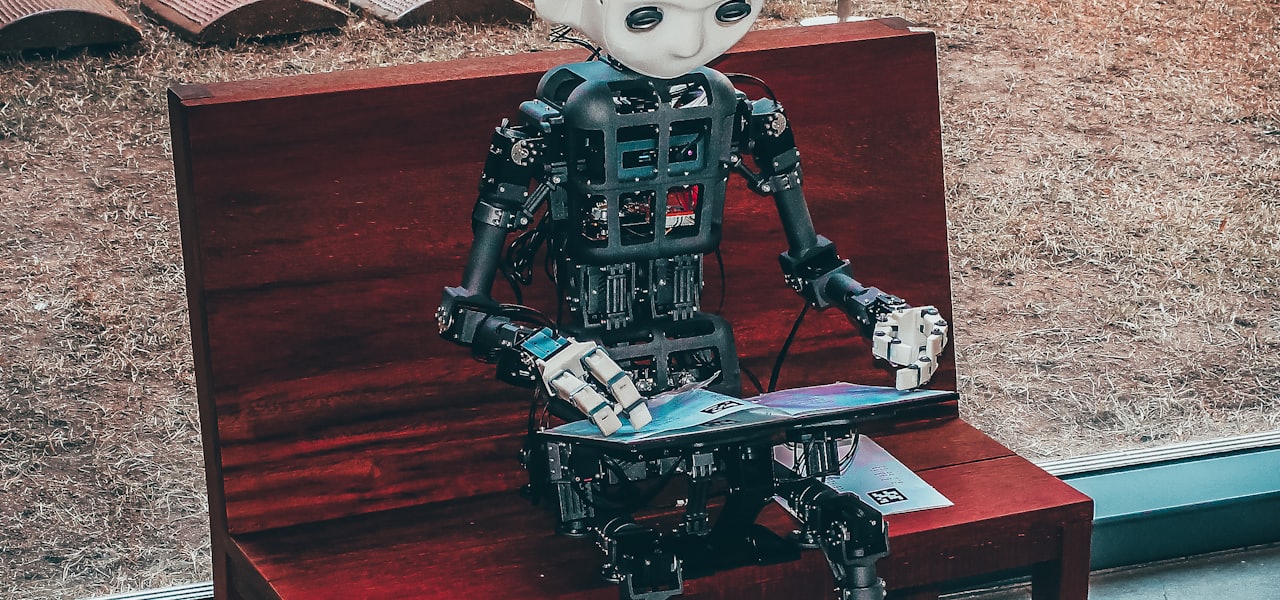
The core idea of artificial intelligence systems integration is making individual software components, such as speech synthesizers, interoperable with other components, such as common sense knowledgebases, in order to create larger, broader and more capable A.I. systems. The main methods that have been proposed for integration are message routing, or communication protocols that the software components use to communicate with each other, often through a middleware blackboard system. Most artificial intelligence systems involve some sort of integrated technologies, for example, the integration of speech synthesis technologies with that of speech recognition. However, in recent years, there has been an increasing discussion on the importance of systems integration as a field in its own right. Proponents of this approach are researchers such as Marvin Minsky, Aaron Sloman, Deb Roy, Kristinn R. Thórisson and Michael A. Arbib. A reason for the recent attention A.I. integration is attracting is that there have already been created a number of (relatively) simple A.I. systems for specific problem domains (such as computer vision, speech synthesis, etc.), and that integrating what's already available is a more logical approach to broader A.I. than building monolithic systems from scratch. == Integration focus == The focus on systems' integration, especially with regard to modular approaches, derive from the fact that most intelligences of significant scales are composed of a multitude of processes and/or utilize multi-modal input and output. For example, a humanoid-type of intelligence would preferably have to be able to talk using speech synthesis, hear using speech recognition, understand using a logical (or some other undefined) mechanism, and so forth. In order to produce artificially intelligent software of broader intelligence, integration of these modalities is necessary. == Challenges and solutions == Collaboration is an integral part of software development as evidenced by the size of software companies and the size of their software departments. Among the tools to ease software collaboration are various procedures and standards that developers can follow to ensure quality, reliability and that their software is compatible with software created by others (such as W3C standards for webpage development). However, collaboration in fields of A.I. has been lacking, for the most part not seen outside the respected schools, departments or research institutes (and sometimes not within them either). This presents practitioners of A.I. systems integration with a substantial problem and often causes A.I. researchers to have to 're-invent the wheel' each time they want a specific functionality to work with their software. Even more damaging is the "not invented here" syndrome, which manifests itself in a strong reluctance of A.I. researchers to build on the work of others. The outcome of this in A.I. is a large set of "solution islands": A.I. research has produced numerous isolated software components and mechanisms that deal with various parts of intelligence separately. To take some examples: Speech synthesis FreeTTS from CMU Speech recognition Sphinx from CMU Logical reasoning OpenCyc from Cycorp Open Mind Common Sense Net from MIT With the increased popularity of the free software movement, a lot of the software being created, including A.I. systems, is available for public exploit. The next natural step is to merge these individual software components into coherent, intelligent systems of a broader nature. As a multitude of components (that often serve the same purpose) have already been created by the community, the most accessible way of integration is giving each of these components an easy way to communicate with each other. By doing so, each component by itself becomes a module, which can then be tried in various settings and configurations of larger architectures. Some challenging and limitations of using A.I. software is the uncontrolled fatal errors. For example, serious and fatal errors have been discovered in very precise fields such as human oncology, as in an article published in the journal Oral Oncology Reports entitled "When AI goes wrong: Fatal errors in oncological research reviewing assistance". The article pointed out a grave error in artificial intelligence based on GBT in the field of biophysics. Many online communities for A.I. developers exist where tutorials, examples, and forums aim at helping both beginners and experts build intelligent systems. However, few communities have succeeded in making a certain standard, or a code of conduct popular to allow the large collection of miscellaneous systems to be integrated with ease. == Methodologies == === Constructionist design methodology === The constructionist design methodology (CDM, or 'Constructionist A.I.') is a formal methodology proposed in 2004, for use in the development of cognitive robotics, communicative humanoids and broad AI systems. The creation of such systems requires the integration of a large number of functionalities that must be carefully coordinated to achieve coherent system behavior. CDM is based on iterative design steps that lead to the creation of a network of named interacting modules, communicating via explicitly typed streams and discrete messages. The OpenAIR message protocol (see below) was inspired by the CDM and has frequently been used to aid in the development of intelligent systems using CDM. == Examples == ASIMO, Honda's humanoid robot, and QRIO, Sony's version of a humanoid robot. Cog, M.I.T. humanoid robot project under the direction of Rodney Brooks. AIBO, Sony's robot dog, integrates vision, hearing and motorskills. TOPIO, TOSY's humanoid robot can play ping-pong with human
User modeling
User modeling is the subdivision of human–computer interaction which describes the process of building up and modifying a conceptual understanding of the user. The main goal of user modeling is customization and adaptation of systems to the user's specific needs. The system needs to "say the 'right' thing at the 'right' time in the 'right' way". To do so it needs an internal representation of the user. Another common purpose is modeling specific kinds of users, including modeling of their skills and declarative knowledge, for use in automatic software-tests. User-models can thus serve as a cheaper alternative to user testing but should not replace user testing. == Background == A user model is the collection and categorization of personal data associated with a specific user. A user model is a (data) structure that is used to capture certain characteristics about an individual user, and a user profile is the actual representation in a given user model. The process of obtaining the user profile is called user modeling. Therefore, it is the basis for any adaptive changes to the system's behavior. Which data is included in the model depends on the purpose of the application. It can include personal information such as users' names and ages, their interests, their skills and knowledge, their goals and plans, their preferences and their dislikes or data about their behavior and their interactions with the system. There are different design patterns for user models, though often a mixture of them is used. Static user models Static user models are the most basic kinds of user models. Once the main data is gathered they are normally not changed again, they are static. Shifts in users' preferences are not registered and no learning algorithms are used to alter the model. Dynamic user models Dynamic user models allow a more up to date representation of users. Changes in their interests, their learning progress or interactions with the system are noticed and influence the user models. The models can thus be updated and take the current needs and goals of the users into account. Stereotype based user models Stereotype based user models are based on demographic statistics. Based on the gathered information users are classified into common stereotypes. The system then adapts to this stereotype. The application therefore can make assumptions about a user even though there might be no data about that specific area, because demographic studies have shown that other users in this stereotype have the same characteristics. Thus, stereotype based user models mainly rely on statistics and do not take into account that personal attributes might not match the stereotype. However, they allow predictions about a user even if there is rather little information about him or her. Highly adaptive user models Highly adaptive user models try to represent one particular user and therefore allow a very high adaptivity of the system. In contrast to stereotype based user models they do not rely on demographic statistics but aim to find a specific solution for each user. Although users can take great benefit from this high adaptivity, this kind of model needs to gather a lot of information first. == Data gathering == Information about users can be gathered in several ways. There are three main methods: Asking for specific facts while (first) interacting with the system Mostly this kind of data gathering is linked with the registration process. While registering users are asked for specific facts, their likes and dislikes and their needs. Often the given answers can be altered afterwards. Learning users' preferences by observing and interpreting their interactions with the system In this case users are not asked directly for their personal data and preferences, but this information is derived from their behavior while interacting with the system. The ways they choose to accomplish a tasks, the combination of things they takes interest in, these observations allow inferences about a specific user. The application dynamically learns from observing these interactions. Different machine learning algorithms may be used to accomplish this task. A hybrid approach which asks for explicit feedback and alters the user model by adaptive learning This approach is a mixture of the ones above. Users have to answer specific questions and give explicit feedback. Furthermore, their interactions with the system are observed and the derived information are used to automatically adjust the user models. Though the first method is a good way to quickly collect main data it lacks the ability to automatically adapt to shifts in users' interests. It depends on the users' readiness to give information and it is unlikely that they are going to edit their answers once the registration process is finished. Therefore, there is a high likelihood that the user models are not up to date. However, this first method allows the users to have full control over the collected data about them. It is their decision which information they are willing to provide. This possibility is missing in the second method. Adaptive changes in a system that learns users' preferences and needs only by interpreting their behavior might appear a bit opaque to the users, because they cannot fully understand and reconstruct why the system behaves the way it does. Moreover, the system is forced to collect a certain amount of data before it is able to predict the users' needs with the required accuracy. Therefore, it takes a certain learning time before a user can benefit from adaptive changes. However, afterwards these automatically adjusted user models allow a quite accurate adaptivity of the system. The hybrid approach tries to combine the advantages of both methods. Through collecting data by directly asking its users it gathers a first stock of information which can be used for adaptive changes. By learning from the users' interactions it can adjust the user models and reach more accuracy. Yet, the designer of the system has to decide, which of these information should have which amount of influence and what to do with learned data that contradicts some of the information given by a user. == System adaptation == Once a system has gathered information about a user it can evaluate that data by preset analytical algorithm and then start to adapt to the user's needs. These adaptations may concern every aspect of the system's behavior and depend on the system's purpose. Information and functions can be presented according to the user's interests, knowledge or goals by displaying only relevant features, hiding information the user does not need, making proposals what to do next and so on. One has to distinguish between adaptive and adaptable systems. In an adaptable system the user can manually change the system's appearance, behavior or functionality by actively selecting the corresponding options. Afterwards the system will stick to these choices. In an adaptive system a dynamic adaption to the user is automatically performed by the system itself, based on the built user model. Thus, an adaptive system needs ways to interpret information about the user in order to make these adaptations. One way to accomplish this task is implementing rule-based filtering. In this case a set of IF... THEN... rules is established that covers the knowledge base of the system. The IF-conditions can check for specific user-information and if they match the THEN-branch is performed which is responsible for the adaptive changes. Another approach is based on collaborative filtering. In this case information about a user is compared to that of other users of the same systems. Thus, if characteristics of the current user match those of another, the system can make assumptions about the current user by presuming that he or she is likely to have similar characteristics in areas where the model of the current user is lacking data. Based on these assumption the system then can perform adaptive changes. == Usages == Adaptive hypermedia: In an adaptive hypermedia system the displayed content and the offered hyperlinks are chosen on basis of users' specific characteristics, taking their goals, interests, knowledge and abilities into account. Thus, an adaptive hypermedia system aims to reduce the "lost in hyperspace" syndrome by presenting only relevant information. Adaptive educational hypermedia: Being a subdivision of adaptive hypermedia the main focus of adaptive educational hypermedia lies on education, displaying content and hyperlinks corresponding to the user's knowledge on the field of study. Intelligent tutoring system: Unlike adaptive educational hypermedia systems intelligent tutoring systems are stand-alone systems. Their aim is to help students in a specific field of study. To do so, they build up a user model where they store information about abilities, knowledge and needs of the user. The system can now adapt to this user by presenting approp
Interactive activation and competition networks
Interactive activation and competition (IAC) networks are artificial neural networks used to model memory and intuitive generalizations. They are made up of nodes or artificial neurons which are arrayed and activated in ways that emulate the behaviors of human memory. The IAC model is used by the parallel distributed processing (PDP) Group and is associated with James L. McClelland and David E. Rumelhart; it is described in detail in their book Explorations in Parallel Distributed Processing: A Handbook of Models, Programs, and Exercises. This model does not contradict any currently known biological data or theories, and its performance is close enough to human performance as to warrant further investigation.
List of color palettes
The following is a list that contains color palettes for notable computer graphics, terminals and video game consoles. Only a simulated image using a palette and its name are given. Main articles are linked from the name of each palette, test charts, sample colours, simulated images, and further technical details (including references). During older eras of computing, manufacturers developed many different display systems often in a competitive, non-collaborative basis (with a few exceptions in the VESA consortium), creating many proprietary, non-standard different instances of display hardware. Often, as with early personal and home computers, a given machine employed its unique display subsystem, also with its unique color palette. Furthermore, software developers had made use of the color abilities of distinct display systems in many different ways. The result is that there is no single common standard nomenclature or classification taxonomy which can encompass every computer color palette. In order to organize the material, color palettes have been grouped following certain criteria. First, generic monochrome and full RGB repertories common to various computer display systems are listed. Then, usual color repertories used for display systems that employ indexed color techniques. And finally, specific manufacturers' color palettes implemented in many representative early personal computers and video game consoles of various brands. The list for personal computer palettes is split into two categories: 8-bit and 16-bit machines. This is not intended as a true strict categorization of such machines, because mixed architectures also exist (16-bit processors with an 8-bit data bus or 32-bit processors with a 16-bit data bus, among others). The distinction is based more on broad 8-bit and 16-bit computer ages or generations (around 1975–1985 and 1985–1995, respectively) and their associated state of the art in color display capabilities. The following is the common color test chart and sample image used to render each palette in this list: See further details in the summary paragraph of the corresponding article. == List of monochrome and RGB palettes == In this article, the term monochrome palette means a set of intensities for a monochrome display, and the term RGB palette is defined as the complete set of combinations a given RGB display can offer by mixing all the possible intensities of the red, green, and blue primaries available in its hardware. These are generic complete repertories of colors to produce black and white and RGB color pictures by the display hardware, not necessarily the total number of such colors that can be simultaneously displayed in a given text or graphic mode of any machine. RGB is the most common method to produce colors for displays; so these complete RGB color repertories have every possible combination of R-G-B triplets within any given maximum number of levels per component. For specific hardware and different methods to produce colors than RGB, see the List of computer hardware palettes and the List of video game consoles sections. For various software arrangements and sorts of colors, including other possible full RGB arrangements within 8-bit depth displays, see the List of software palettes section. === Monochrome palettes === These palettes only have shades of gray. === Dichrome palettes === Each permuted pair of red, green, and blue (16-bit color palette, with 65,536 colors). For example, "additive red green" has zero blue and "subtractive red green" has full blue. === Regular RGB palettes === These full RGB palettes employ the same number of bits to store the relative intensity for the red, green and blue components of every image's pixel color. Thus, they have the same number of levels per channel and the total number of possible colors is always the cube of a power of two. It should be understood that 'when developed' many of these formats were directly related to the size of some host computers 'natural word length' in bytes—the amount of memory in bits held by a single memory address such that the CPU can grab or put it in one operation. === Non-regular RGB palettes === These are also RGB palettes, in the sense defined above (except for 4-bit RGBI, which has an intensity bit that affects all channels at once), but either they do not have the same number of levels for each primary channel, or the numbers are not powers of two, so are not represented as separate bit fields. All of these have been used in popular personal computers. == List of software palettes == Systems that use a 4-bit or 8-bit pixel depth can display up to 16 or 256 colors simultaneously. Many personal computers in the later 1980s and early 1990s displayed at most 256 different colors, freely selected by software (either by the user or by a program) from their wider hardware's color palette. Usual selections of colors in limited subsets (generally 16 or 256) of the full palette includes some RGB level arrangements commonly used with the 8 bpp palettes as master palettes or universal palettes (i.e., palettes for multipurpose uses). These are some representative software palettes, but any selection can be made in such types of systems. === System specific palettes === These are selections of colors officially employed as system palettes in some popular operating systems for personal computers that feature 8-bit displays. === RGB arrangements === These are selections of colors based on evenly ordered RGB levels, mainly used as master palettes to display any kind of image within the limitations of the 8-bit pixel depth. === Other common uses of software palettes === == List of computer hardware palettes == In old personal computers and terminals that offered color displays, some color palettes were chosen algorithmically to provide the most diverse set of colors for a given palette size, and others were chosen to assure the availability of certain colors. In many early home computers, especially when the palette choices were determined at the hardware level by resistor combinations, the palette was determined by the manufacturer. Many early models output composite video colors. When seen on TV devices, the perception of the colors may not correspond with the value levels for the color values employed (most noticeable with NTSC TV color system). For current RGB display systems for PCs (Super VGA, etc.), see the 16-bit RGB and 24-bit RGB for High Color (thousands) and True Color (millions of colors) modes. For video game consoles, see the List of video game consoles section. For every model, their main different graphical color modes are listed based exclusively in the way they handle colors on screen, not all their different screen modes. The list is organized roughly historically by video hardware, not by branch. They are listed according to the original model of each system, which means that extended versions, clones, and compatibles also support the original palette. === Terminals and 8-bit machines === === 16-bit machines === === Video game console palettes === Color palettes of some of the most popular video game consoles. The criteria are the same as those of the List of computer hardware palettes section.
WordNet
WordNet is a lexical database of semantic relations between words that links words into semantic relations including synonyms, hyponyms, and meronyms. The synonyms are grouped into synsets with short definitions and usage examples. It can thus be seen as a combination and extension of a dictionary and thesaurus. Its primary use is in automatic text analysis and artificial intelligence applications. It was first created in the English language and the English WordNet database and software tools have been released under a BSD style license and are freely available for download. The latest official release from Princeton was released in 2011. Princeton currently has no plans to release any new versions due to staffing and funding issues. New versions are still being released annually through the Open English WordNet website. Until about 2024 an online version was previously available through wordnet.princeton.edu. That version of WordNet has been deprecated, but a new online version is available at en-word.net. There are now WordNets in more than 200 languages. == History and team members == WordNet was first created in 1985, in English only, in the Cognitive Science Laboratory of Princeton University under the direction of psychology professor George Armitage Miller. It was later directed by Christiane Fellbaum. The project was initially funded by the U.S. Office of Naval Research, and later also by other U.S. government agencies including the DARPA, the National Science Foundation, the Disruptive Technology Office (formerly the Advanced Research and Development Activity) and REFLEX. George Miller and Christiane Fellbaum received the 2006 Antonio Zampolli Prize for their work with WordNet. The Global WordNet Association is a non-commercial organization that provides a platform for discussing, sharing and connecting WordNets for all languages in the world. Christiane Fellbaum and Piek Th.J.M. Vossen are its co-presidents. == Database contents == The database contains 155,327 words organized in 175,979 synsets for a total of 207,016 word-sense pairs; in compressed form, it is about 12 megabytes in size. It includes the lexical categories nouns, verbs, adjectives and adverbs but ignores prepositions, determiners and other function words. Words from the same lexical category that are roughly synonymous are grouped into synsets, which include simplex words as well as collocations like "eat out" and "car pool." The different senses of a polysemous word form are assigned to different synsets. A synset's meaning is further clarified with a short defining gloss and one or more usage examples. An example adjective synset is: good, right, ripe – (most suitable or right for a particular purpose; "a good time to plant tomatoes"; "the right time to act"; "the time is ripe for great sociological changes") All synsets are connected by means of semantic relations. These relations, which are not all shared by all lexical categories, include: Nouns hypernym: Y is a hypernym of X if every X is a (kind of) Y (canine is a hypernym of dog) hyponym: Y is a hyponym of X if every Y is a (kind of) X (dog is a hyponym of canine) coordinate term: Y is a coordinate term of X if X and Y share a hypernym (wolf is a coordinate term of dog, and dog is a coordinate term of wolf) holonym: Y is a holonym of X if X is a part of Y (building is a holonym of window) meronym: Y is a meronym of X if Y is a part of X (window is a meronym of building) Verbs hypernym: the verb Y is a hypernym of the verb X if the activity X is a (kind of) Y (to perceive is an hypernym of to listen) troponym: the verb Y is a troponym of the verb X if the activity Y is doing X in some manner (to lisp is a troponym of to talk) entailment: the verb Y is entailed by the verb X if by doing X you must be doing Y (to sleep is entailed by to snore) coordinate term: the verb Y is a coordinate term of the verb X if X and Y share a hypernym (to lisp is a coordinate term of to yell, and to yell is a coordinate term of to lisp) These semantic relations hold among all members of the linked synsets. Individual synset members (words) can also be connected with lexical relations. For example, (one sense of) the noun "director" is linked to (one sense of) the verb "direct" from which it is derived via a "morphosemantic" link. The morphology functions of the software distributed with the database try to deduce the lemma or stem form of a word from the user's input. Irregular forms are stored in a list, and looking up "ate" will return "eat," for example. == Knowledge structure == Both nouns and verbs are organized into hierarchies, defined by hypernym or IS A relationships. For instance, one sense of the word dog is found following hypernym hierarchy; the words at the same level represent synset members. Each set of synonyms has a unique index. At the top level, these hierarchies are organized into 25 beginner "trees" for nouns and 15 for verbs (called lexicographic files at a maintenance level). All are linked to a unique beginner synset, "entity". Noun hierarchies are far deeper than verb hierarchies. Adjectives are not organized into hierarchical trees. Instead, two "central" antonyms such as "hot" and "cold" form binary poles, while 'satellite' synonyms such as "steaming" and "chilly" connect to their respective poles via a "similarity" relations. The adjectives can be visualized in this way as "dumbbells" rather than as "trees". == Psycholinguistic aspects == The initial goal of the WordNet project was to build a lexical database that would be consistent with theories of human semantic memory developed in the late 1960s. Psychological experiments indicated that speakers organized their knowledge of concepts in an economic, hierarchical fashion. Retrieval time required to access conceptual knowledge seemed to be directly related to the number of hierarchies the speaker needed to "traverse" to access the knowledge. Thus, speakers could more quickly verify that canaries can sing because a canary is a songbird, but required slightly more time to verify that canaries can fly (where they had to access the concept "bird" on the superordinate level) and even more time to verify canaries have skin (requiring look-up across multiple levels of hyponymy, up to "animal"). While such psycholinguistic experiments and the underlying theories have been subject to criticism, some of WordNet's organization is consistent with experimental evidence. For example, anomic aphasia selectively affects speakers' ability to produce words from a specific semantic category, a WordNet hierarchy. Antonymous adjectives (WordNet's central adjectives in the dumbbell structure) are found to co-occur far more frequently than chance, a fact that has been found to hold for many languages. == As a lexical ontology == WordNet is sometimes called an ontology, a persistent claim that its creators do not make. The hypernym/hyponym relationships among the noun synsets can be interpreted as specialization relations among conceptual categories. In other words, WordNet can be interpreted and used as a lexical ontology in the computer science sense. However, such an ontology should be corrected before being used, because it contains hundreds of basic semantic inconsistencies; for example there are, (i) common specializations for exclusive categories and (ii) redundancies in the specialization hierarchy. Furthermore, transforming WordNet into a lexical ontology usable for knowledge representation should normally also involve (i) distinguishing the specialization relations into subtypeOf and instanceOf relations, and (ii) associating intuitive unique identifiers to each category. Although such corrections and transformations have been performed and documented as part of the integration of WordNet 1.7 into the cooperatively updatable knowledge base of WebKB-2, most projects claiming to reuse WordNet for knowledge-based applications (typically, knowledge-oriented information retrieval) simply reuse it directly. WordNet has also been converted to a formal specification, by means of a hybrid bottom-up top-down methodology to automatically extract association relations from it and interpret these associations in terms of a set of conceptual relations, formally defined in the DOLCE foundational ontology. In most works that claim to have integrated WordNet into ontologies, the content of WordNet has not simply been corrected when it seemed necessary; instead, it has been heavily reinterpreted and updated whenever suitable. This was the case when, for example, the top-level ontology of WordNet was restructured according to the OntoClean-based approach, or when it was used as a primary source for constructing the lower classes of the SENSUS ontology. == Limitations == The most widely discussed limitation of WordNet (and related resources like ImageNet) is that some of the semantic relations are more suited to concrete concepts than to abstract concepts. For example,